
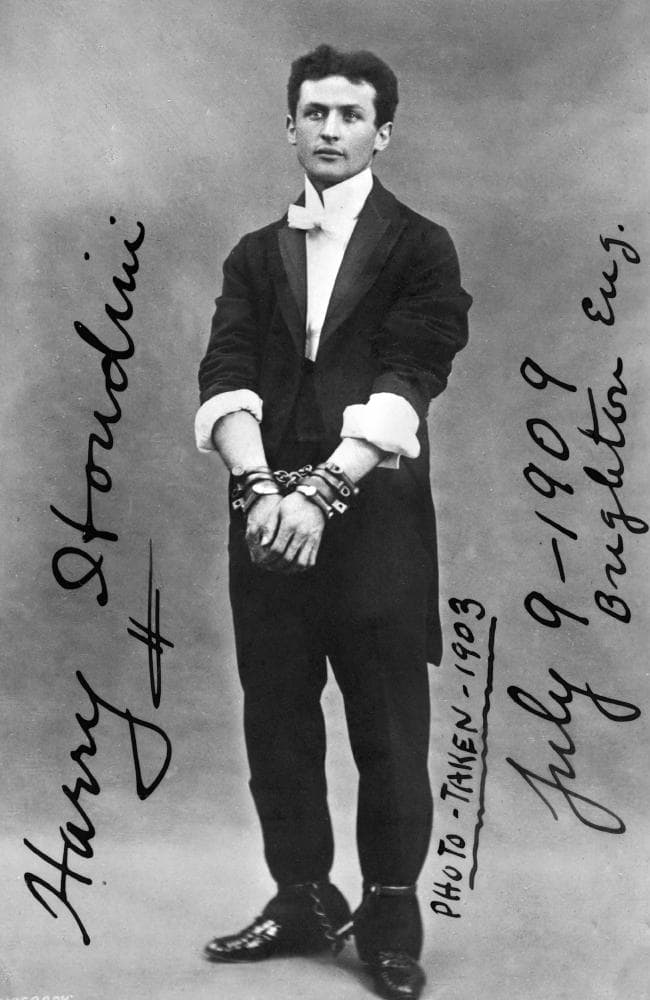
The Hungarian-American illusionist and stunt performer was born Erik Weisz in 1874, in downtown Budapest. At the age of 4, his rabbi father decided to continue the life of the Weisz family overseas, in the United States. Eventhough the family spoke Hungarian, German and Yiddish, without proper English knowledge they struggled in life. Erik was only 8 when he started to help his parents out and took jobs as shooshiner, paperboy, and locksmith prentice as well. In his spare time he managed to live for his hobbies: reading plenty of books, training, jogging, swimming, and improving his flexibility.
The big turning point in his life and career came, when he read the autobiography of Jean Eugène Robert-Houdin, famous French magician of the time. Immediately falling in love with magic, it didn't take him long to come up with a new stage name: Houdini. According to his buddy and fellow performer, Jacob, to show admiration to a mentor, an 'i' is to be added to the end of the person's last name. Erik's first name was easy to switch, too: he was known as 'Eri' (Hungarian nickname to Erik) to his family, so the similar sounding 'Harry' was adopted from this.
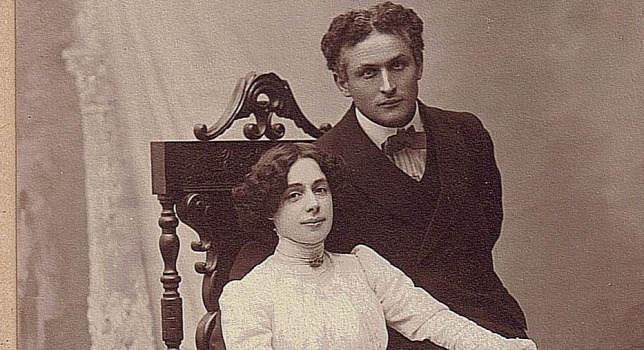 Dealing with card tricks first, accompanied by Jacob, later by his own brother Dash, the 'Houdini Brothers' soon introduced more complicated acts: mysterious disappearings, "The Metamorphosis" and invented the famous escapes, too. In the meantime he met his future wife. Just 3 weeks after their first date, the couple got married, and so Bess replaced Dash to become the life-long stage assistant to his husband.
 After laying the foundation of their American future, 'The Houdinis' traveled to Europe, in order to conquer the old continent, too. At the first stop of their tour, in London he gave a demonstration of escape from handcuffs at Scotland Yard. He succdeded in baffling the authorities so effectively, that they got booked for the following 6 months. The "King of Handcuffs" marched through Germany, Netherlands, Scotland, Russia and France, too.
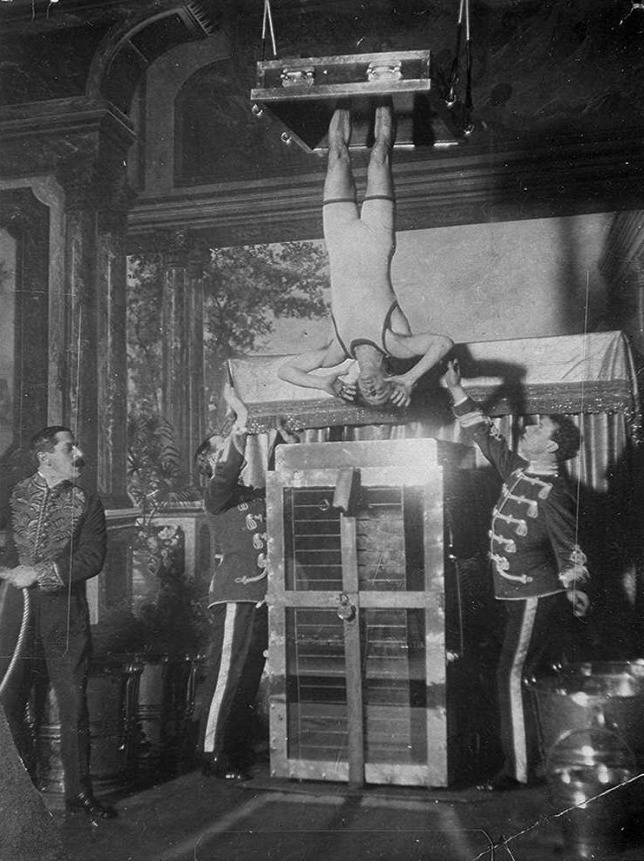
Arriving back to the States, he freed himself from many of the most infamous jails, newest handcuffs, chains, and straitjackest while hanging from a rope in sight of street audiences. Fighting off the rivals he turned to more dangerous, life threatening acts: he introduced the Chinese water torture cell, in which he was suspended upside-down in a locked glass-and-steel cabinet full of water, holding his breath for nearly four minutes. He continued to perform this escape for the rest of his life. He published numerous books, directed films and lectured at several universities.
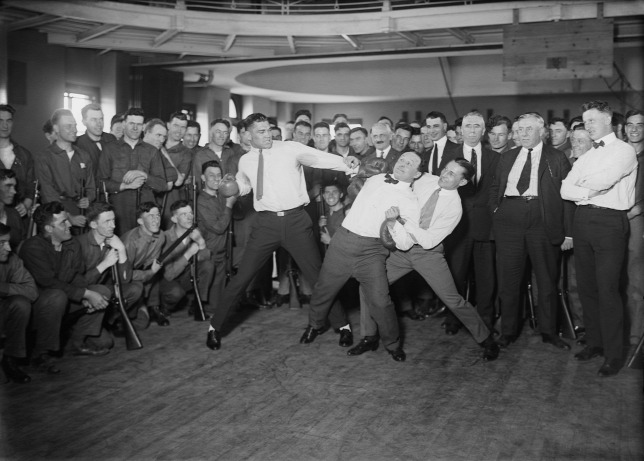 Some hours before one lecture at McGill University, Montreal is when fate eventually knocked on his door. Three of his students came to visit him in his dressing room asking whether his abs are really that strong and unbreakable as they previously heard. As he answered 'Yes', one of the students - J. Gordon Whitehead-, didn't give him time to get prepared and punched him in his stomach suddenly and forcefully thee times in a row. However he felt extremely weak after the incident, he managed to perform to his audience and didn't seek medical help. When he finally saw a doctor days later, it was too late. His appendix exploded, blunt force trauma and peritonitis were the main causes of his death. On Halloween day, 31 October 1926, Harry Houdini the most famous escape artist stopped his dance with death for good.